
Check Out Our Google Reviews
〰️
Check Out Our Google Reviews 〰️
Chinese Medicine
What Is Chinese Medicine?
Chinese medicine is a complete system of healthcare refined over more than two thousand years, and it sees your body as one connected landscape where sleep, digestion, mood, pain, and hormones are always speaking to each other.
My work is to listen to that whole conversation and find the pattern underneath your symptoms, so the care we choose reaches the root of what you are feeling.
What acupuncture means in my treatment room
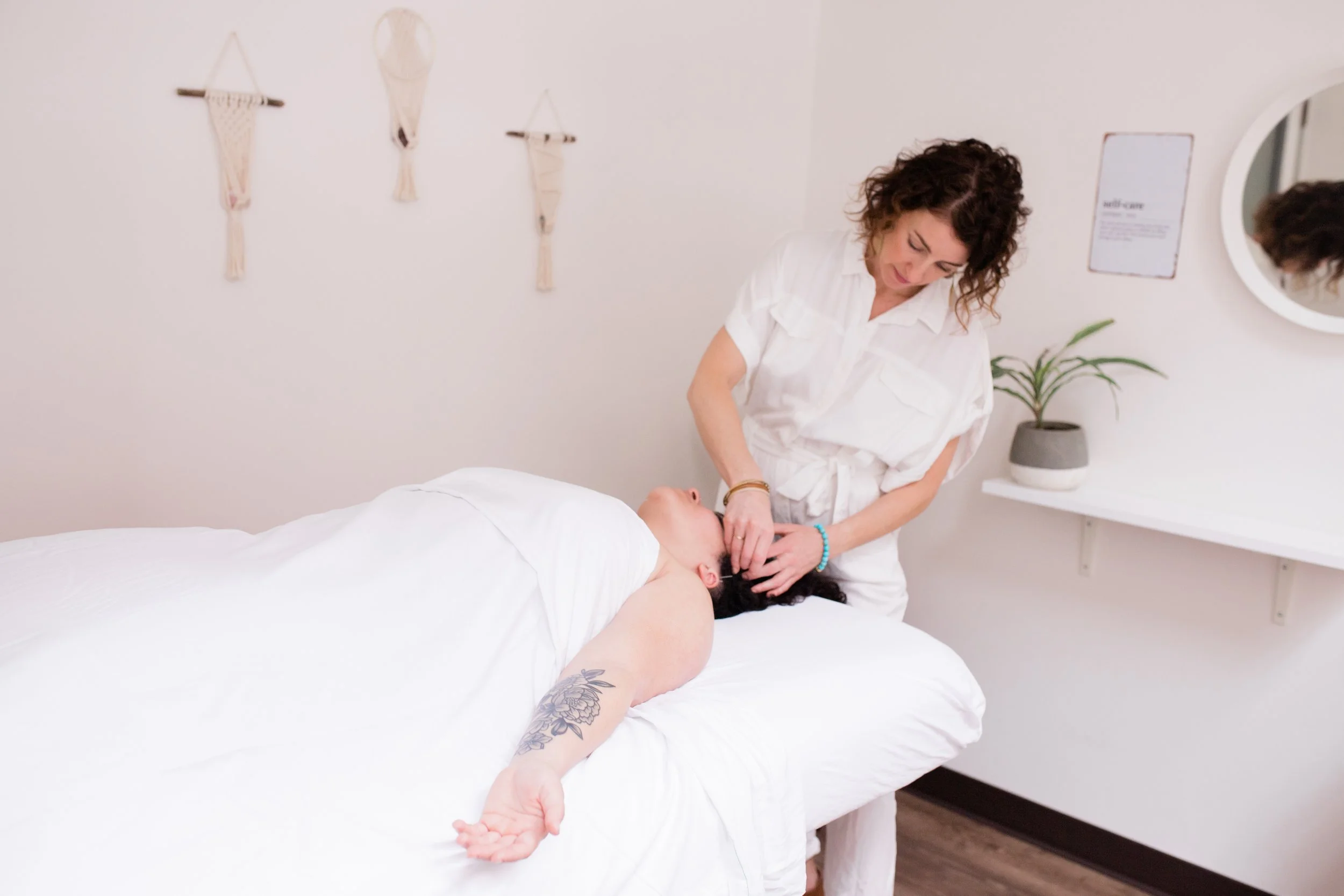
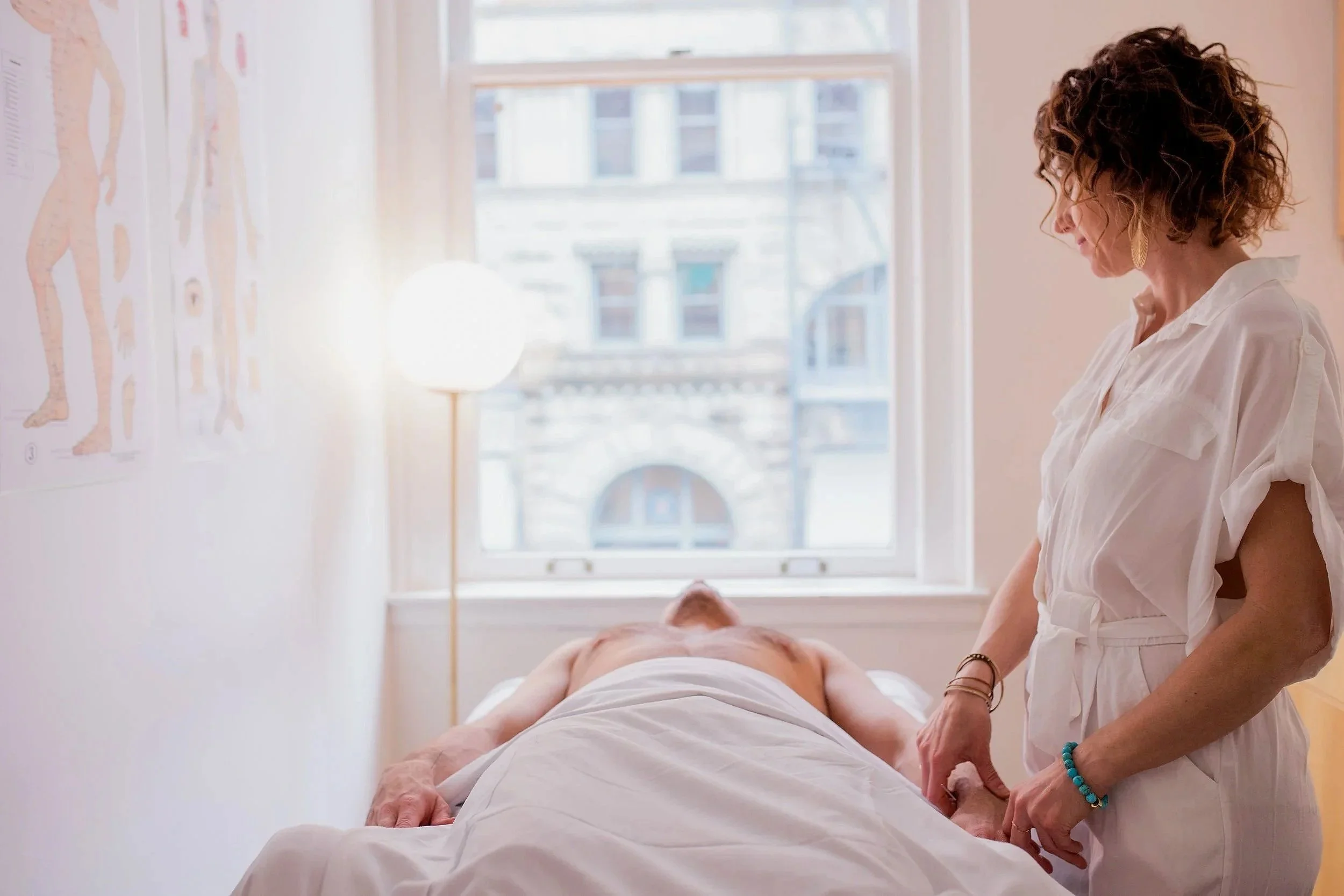
Most textbooks describe acupuncture as the insertion of fine needles into specific points to restore balance, and that definition is accurate as far as it goes. In my hands, acupuncture can be as gentle as a whisper or as direct as an arrow aimed at the heart of your symptoms, and I adjust it for every person and every visit.
It is the medicine I reach for first in my own times of stress, and I use it regularly to keep my body steady, so I speak about it from both sides of the table. After a first treatment, patients usually tell me their main complaint has eased, and many also notice better sleep, steadier emotions, and more energy than they expected.
How I decide where the needles go
Before a single needle goes in, I gather information in four classic ways, and together they show me how your body is working on the day you arrive.
Pulse
I feel your pulse at three positions on each wrist, reading its depth, strength, rhythm, and quality, and I check it again during treatment to be sure the work is landing.
Tongue
The color, coating, and shape of your tongue offer a clear picture of what is happening inside, so I look at it at every single visit.
Palpation
I press gently along the acupuncture channels and your abdomen to find tender or reactive areas that show me where your body is holding on.
Observation
I notice your skin, your eyes, your posture, and the way you describe your symptoms, always without judgment, because each detail helps me understand you.
What a treatment might look like
You arrive a little different each time, so no two treatments are exactly alike, though every session honors the constitution you were born with. Depending on the day, your treatment might include any of these.
- A few calming needles and plenty of room to let go of what you have been carrying
- Needles along the spine to settle an overworked nervous system
- Muscle release through the neck, shoulders, and upper back to ease tension headaches
- Points on the low back and belly to soften menstrual pain
- Forty or more fine needles on the face to support collagen and bring back your glow
Chronic and complex conditions are some of my favorite to treat, because they ask for a steady partner who stays curious about what truly works for your body.
Acupuncture can be as gentle as a whisper or as direct as an arrow aimed at the heart of your symptoms.
The tools I bring to your care
Acupuncture is the heart of my practice, and these traditional therapies extend what each treatment can do.
Cupping
Glass cups create gentle suction on the skin, drawing fresh circulation into tight muscles and loosening the fascia where tension likes to settle.
Moxibustion
Moxa is dried mugwort, warmed near specific points to send gentle heat deep into the channels, which comforts cold, achy, and depleted patterns.
Gua Sha
A smooth tool glides along the skin to move stagnation and ease muscle pain, and on the face it reduces puffiness and brings color back to your cheeks.
Chinese Herbal Medicine
Custom formulas carry the work of each treatment into the days between visits, prepared as traditional teas, easy granules, or capsules.
TDP Heat Lamp
This lamp warms a mineral-coated plate that radiates soothing far-infrared heat, relaxing your muscles and boosting local circulation while you rest.
Therapeutic Bodywork
Hands-on massage moves qi and fluids through areas of tension, eases lingering aches, and helps your whole nervous system settle.
Questions I hear often
Does acupuncture hurt?
The needles are hair-thin, and most people barely notice them going in. What you may feel afterward is called the qi response, often described as a dull ache, gentle warmth, tingling, or a sense of movement around the point, and I always adjust your treatment to what feels right for you.
What kind of results can I expect?
When a symptom is fairly new, usually less than a year old, most people feel change quickly and the relief tends to hold well. Long-standing conditions usually shift more gradually, sometimes with a brief flare at the start, and steady care paired with herbs, food, and lifestyle changes can ease symptoms significantly or clear them altogether.
How often should I come in?
Acupuncture is cumulative, so for most concerns I suggest weekly visits at first and then spacing them out as you improve. Many patients settle into a monthly visit to keep their symptoms at bay and their body feeling steady.
Is acupuncture covered by insurance?
Many plans include acupuncture benefits, and through Zen Space Wellness I am in network with Kaiser, PacificSource, Regence BlueCross BlueShield, Moda, Aetna, Providence, and UnitedHealthcare. Call the Zen Space front desk at 503-287-2800 before your first visit, and the team will verify your coverage for you.
Feel the difference for yourself
The best way to understand Chinese medicine is to experience it, and I would love to welcome you to my table at Zen Space Wellness in Portland.
Chinese Medicine Definitions
Biggest Complaint - What you would like me to focus on that day.
Qi response - The feeling or you get when I insert the needle.
MOXA - Artemesia Vulagaris a species of chrysanthemum. The moxa leaf is bitter and acrid, producing warmth when used in a small amount and strong heat when used in a large amount. When it is burned it penetrates all the meridians eliminating hundreds of diseases.
Cupping - Cupping is a therapy in which a jar is attached to the skin surface to cause local congestion through the negative pressure created by introducing heat in the form of an ignited material. This method has the function of warming and promoting the free flow of qi and blood in the meridians for removing cold and dampness and diminishing swellings and pains.
Massage - Hands on the body respectfully and accurately to move the qi and body fluids in order to remove pains and aches. It helps to move areas of mild qi and blood stagnation, relax the patient and sooth the mind.
Ion Pumping Cords - These are wires with a diode in them and are attached to needles shallowly inserted in the body. They are used mostly as a form of treating the root, but can be used to treat specific symptoms as well. There are several schools of thought regarding their use.
Tongue Diagnosis - Observation of the tongue , also known as tongue diagnosis, is an important procedure in diagnosis by inspection. It provides primary information for the diagnosis to be made by the practitioner. The essential qi that the body uses to survive, is reflected on the tongue via the heart meridian which connects to the root of the tongue. That is why the observation of the tongue can help determine the pathological changes of the internal organs.
Pulse feeling - The location for feeling the pulse is at the wrist where the radial artery throbs. There are three regions, the cun (pronounced "tsoon"), guan ("gwan") and chi ("chirr") positions. These regions each reflect two organs. One organ in the deep layer of the pulse and one in the upper layer of the pulse. So in total we feel the qi of 12 organs as we feel the pulse. We look at the depth, strength, quality and rate to again, help determine the diagnosis.
Palpation - Palpation is a method of diagnosis in which the pathological condition is detected by palpating, feeling and pressing on certain areas of the body.
Observation - Observation is a method of diagnosis in which the practitioner understands and predicts the pathological changes of the internal organs by inspecting the patient's vitality, color, appearance, secretions and excretions. Any slight changes in appearance in these areas can tell pathological conditions in various parts of the body. Observation of the body, therefore is of much help to the practitioner to determine a diagnosis.
TDP Lamp- The term TDP Lamp is an abbreviation for Teding Diancibo Pu which translates to “special electromagnetic spectrum” lamp. The TDP lamp increases blood circulation, which aids in muscle relief by emitting 33 essential minerals into your body. The absorbed energy promotes micro circulation and metabolism, helps improve the immune system. It is good for people with sore muscles, arthritis, bursitis, back ache, tennis elbow and joint pains.
